What my first flight in four months told me about the future of travel
Recently I flew from London to the West Coast of the US – my first fourth dimension on an airplane in iv months. This trip is 1 I took regularly in the pre-COVID-19 era, to go see my parents, but this time each leg of the journey had an chemical element of surprise.
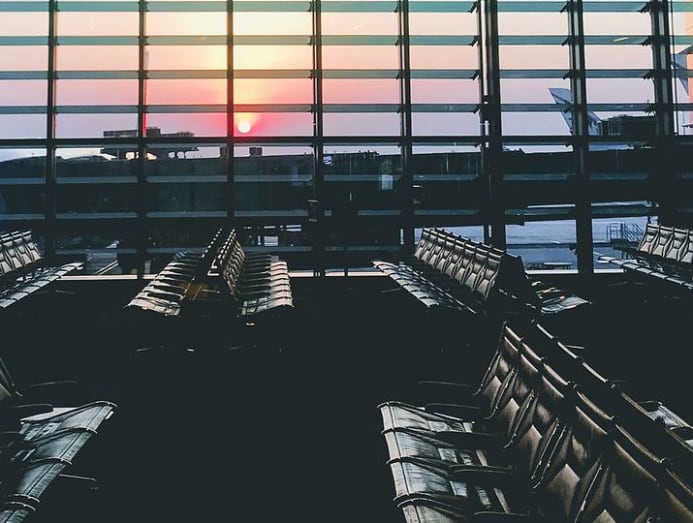
Moving through an empty Heathrow airport, in which the hand-sanitising stations seemed to outnumber the travellers, was quieter and more pleasant than usual. But speaking to airline staff, when all parties are heavily masked, turned out to be difficult because of the muffling issue. Preparing for take-off, I of a sudden appreciated the way the air stewards checked everyone was wearing a face up covering. Landing in the US, passengers had to fill out a short wellness form for COVID-nineteen.
Stepping on an aeroplane today feels a bit like stepping dorsum into the early on days of air travel. Each trip is rare, special – and a little fleck nervus-inducing. Just as early passengers might have worried their aeroplanes would autumn out of the sky, travellers today must grapple with whether they will contract a deadly disease.
Flying these days is totally unlike from before the pandemic – but in many means it may be better. Health standards are higher, airports are not overcrowded and, maybe most importantly, the decision to get on a airplane is no longer something that can exist done on a whim. Gone are the days of inexpensive and easy air travel: Coronavirus has forced everyone to exist much more thoughtful about when and how they fly.
READ> With Zoom meetings, webinars and online programmes, is business organization travel dead?
Right now, global air travel is merely nigh half of what it was this time concluding year, according to airline consultancy OAG. Flying information bear witness some countries are rushing to the airports. In Red china, rider flights in August were nearly on par with the same calendar month last year. Friends who accept taken domestic flights at that place report they are completely full. (The fact that Chinese authorities study no cases of local COVID-xix transmission since mid-August has helped.)
Meanwhile, Europe has been slower to return to flying. In Germany and the United kingdom, the number of flights is simply one-third of normal levels. As a issue, six of the globe's 10 busiest airports were in China in Baronial, up from two out of 10 during the aforementioned period last year, according to OAG data.
This turn down in air travel has been great news for the environment. Before coronavirus, aeroplanes deemed for just over two per cent of global emissions. But every bit lockdowns tightened in March, emissions from air travel fell by a third, and they accept continued to be far below normal levels.
"Gone are the days of cheap and easy air travel: Coronavirus has forced everyone to exist much more thoughtful about when and how they fly."
READ> Best guess on when business organisation travel will recover? It could be years
As an aside, I was surprised to larn during my trip that being inside an airplane does not appear to be significantly more dangerous, in COVID-nineteen terms, than many other social activities. The air in their cabins is typically filtered and recirculated every four minutes. Very few cases of COVID-xix transmission on aeroplanes accept been reported; those that have involve passengers within two rows of the carrier.
Many of the hygiene-related changes are likely to stick around. Equally airlines struggle to recover their business organization and reassure passengers, their COVID-19-related safeguards will go upwards, not down. Some are already handing out plastic face up shields at boarding and making it mandatory to clothing them along with a mask.
Routine COVID-19 testing at airports could exist the adjacent step in this game. Some airports already offering COVID-nineteen tests for travellers (Frankfurt is one example), and Heathrow has built a testing centre that is waiting for government blessing to open.
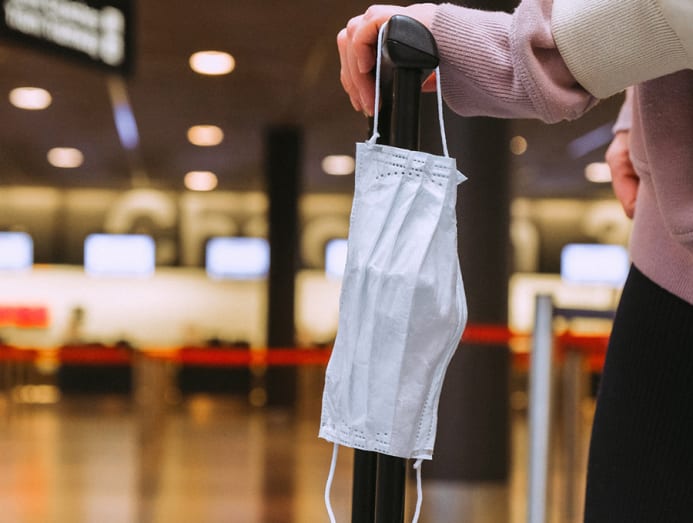
But as security measures changed permanently subsequently September 11, the health safeguards put in place now could be here to stay. Wearing a mask feels awkward at first but – just like packing toiletries into a clear plastic handbag – is something nosotros volition chop-chop go used to.
This is a welcome shift. Among people who are already flying again, anecdotal evidence suggests they are making fewer trips and staying for much longer when they do travel. This practice has long been advocated past the climate-conscious, but never really caught on. At present that we are counting not only the climate toll of flight, only also the health price, it changes the calculus nearly what is worthwhile.
There is a risk, though, that the health-related changes show to be longer-lasting than the behavioural ones. People may rush back to flying every bit COVID-19 fears recede – the full domestic flights in China suggest that is already happening there.
But it'southward as well possible that we volition never view flying in quite the aforementioned fashion – jumping on a aeroplane to become to a conference or an interview may non be as commonplace as information technology in one case was. Simply like in the early days of travel, flying could be a special chance, 1 that is not undertaken lightly. That would be better for the planet, likewise as our wellness.
"Merely as security measures changed permanently later on September 11, the health safeguards put in place now could be here to stay."
By Leslie Claw © 2022 The Financial Times
Leslie Hook is the FT's surround and make clean energy contributor
READ> How the airline industry is preparing for changes in post-pandemic travel
Source: https://cnalifestyle.channelnewsasia.com/experiences/the-future-of-travel-247401
0 Response to "What my first flight in four months told me about the future of travel"
Post a Comment